In brief
- 01Face veneer is thin: IS 1328 sets 0.3 to 1.0 mm for decorative veneer.
- 02A thicker face gives more margin for sanding and later refinishing.
- 03Ask for two numbers: the face veneer and the whole panel.
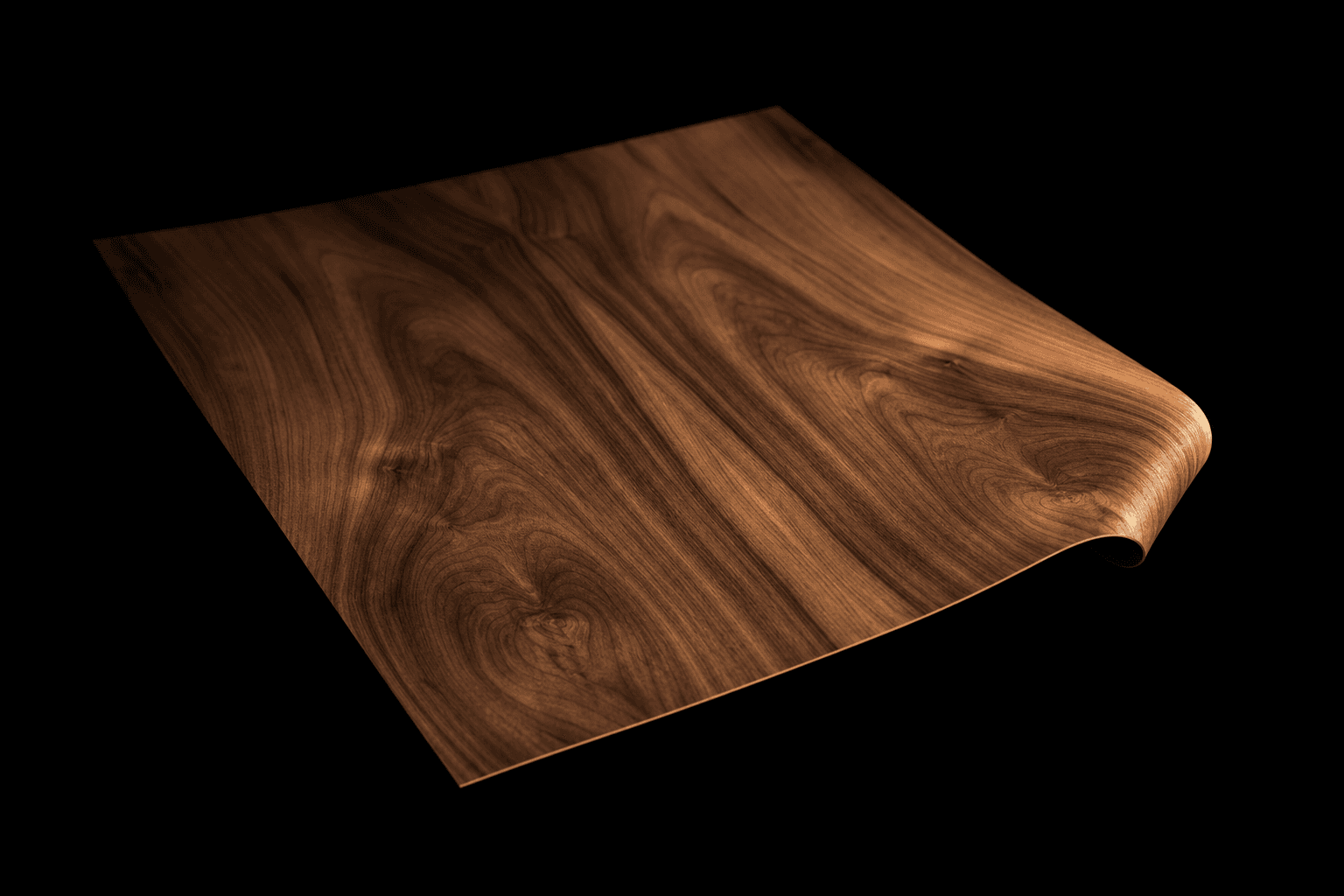
Decorative face veneer is thin, usually well under a millimetre. The Indian standard for veneered decorative plywood, IS 1328, as amended, calls for decorative veneers between 0.3 mm and 1.0 mm thick, and trade suppliers commonly quote faces of around 0.5 to 0.6 mm. Ask for the face thickness of the exact product you are considering. The figure matters less for looks than for how much sanding and polishing the surface can safely take.
Two numbers, not one
In India, decorative veneer is commonly sold already pressed onto a thin plywood or MDF base, so a sheet description often carries two thicknesses. The larger figure is the whole panel. The smaller one, a fraction of a millimetre, is the real wood face. A Perscape Woodline panel, for example, is 3.5 mm overall with a 0.5 mm top veneer. When you compare samples, compare like with like: a thicker panel does not mean a thicker face.
| Figure on the label | What it measures | Why it matters |
|---|---|---|
| Face veneer thickness | The real wood leaf on the show face | Sets how much sanding and refinishing the surface can take |
| Panel thickness | Face, base board and back face together | Decides stiffness, fixing and how the panel sits in the joinery |
| Base board and grade | The plywood or MDF the veneer is pressed onto | Decides how the panel copes with moisture |
| Back face | A balancing veneer or a plainer backer | Keeps a veneered panel flat |
Why thickness matters for sanding and polishing
Most veneered surfaces are sanded before they are finished, and sanded lightly again between coats of polish or lacquer. Every pass removes a little wood. On a thin face, the margin between a smooth surface and sanding through to the glue line or the board beneath is small, and a sand-through is very hard to repair invisibly. That is why veneer calls for fine abrasives, a light hand and particular care at edges and corners, where a machine sander bites hardest. A thicker face gives more room for error now and more room for a light refinish years later.
Thick or thin: the trade-off
- Thinner faces give more leaves from each log, so a matched sequence goes further. They are perfectly sound when pressed and finished with care, but leave less margin for sanding.
- Thicker faces, towards 1 mm, are more tolerant of sanding and of refinishing later in the life of the piece.
- Sawn veneers several millimetres thick do exist, but they sit outside the decorative range in IS 1328 and are a specialist product.
- Neither is better in itself. Match the face to how hard the surface will be worked and used.
Backing and balance
Wood moves with humidity, and a veneer pressed to one side of a board pulls on that side as the glue sets and as the seasons change. Panels are therefore veneered on both faces, with a show veneer on the front and a balancing veneer on the back. IS 1328 asks that the face veneers of decorative plywood be of a thickness and strength that balance each other. The back face does not need to match the front in quality, but it does need to be there.
Backing in the other sense, paper or a thin wood ply bonded behind a single loose leaf, is a different thing. It makes the leaf easier to handle and bend, and it adds to the stated thickness, so check whether a quoted figure includes it.
What thickness does not tell you
Thickness is one line of a specification, not a measure of quality. It says nothing about the species, the cut, the grade of the leaves, whether they were kept in sequence, or how well the panel was pressed. A thick leaf with open splits or poor matching is still a poor surface, and a well-chosen thin leaf on a good base, pressed and finished with care, makes an excellent one. Judge the sample as a whole.
Questions to ask before you buy
- What is the face veneer thickness, and is that figure before or after sanding?
- What is the overall panel thickness, and what is the base: plywood or MDF, and to which grade?
- What is on the back face?
- Who will sand and polish the surface, and do they know how thin the face is?
Common questions
- What is the standard thickness of wood veneer in India?
- Decorative face veneer in India is usually between 0.3 mm and 1.0 mm thick, the range set for decorative veneers in IS 1328, the Indian standard for veneered decorative plywood. Trade suppliers commonly quote around 0.5 to 0.6 mm for furniture and panelling. It is often supplied already pressed onto a plywood or MDF base, so the whole sheet is thicker than its face.
- Is thicker veneer better?
- Not automatically. A thicker face veneer gives more margin when sanding and polishing, and more room for a light refinish later, which helps on surfaces that will be worked hard. A thinner face yields more leaves from each log and is perfectly sound when pressed and finished with care. Choose the thickness for the use, and make sure your polisher knows it.
- Can veneer be sanded?
- Yes, but gently. Because the real wood face is usually under a millimetre thick, heavy or coarse sanding can cut through to the glue line or the board beneath, which is very hard to repair invisibly. Use fine abrasives, take particular care at edges and corners, and stop as soon as the surface is smooth enough to finish.
- Why is veneer applied to both sides of a board?
- Veneer is applied to both faces to keep the panel flat. A leaf pressed to one side only pulls on that side as the glue sets and as humidity changes, which can make the board cup. A balancing veneer on the back evens out those forces. The back face can be a plainer grade than the front, but it should be there.