In brief
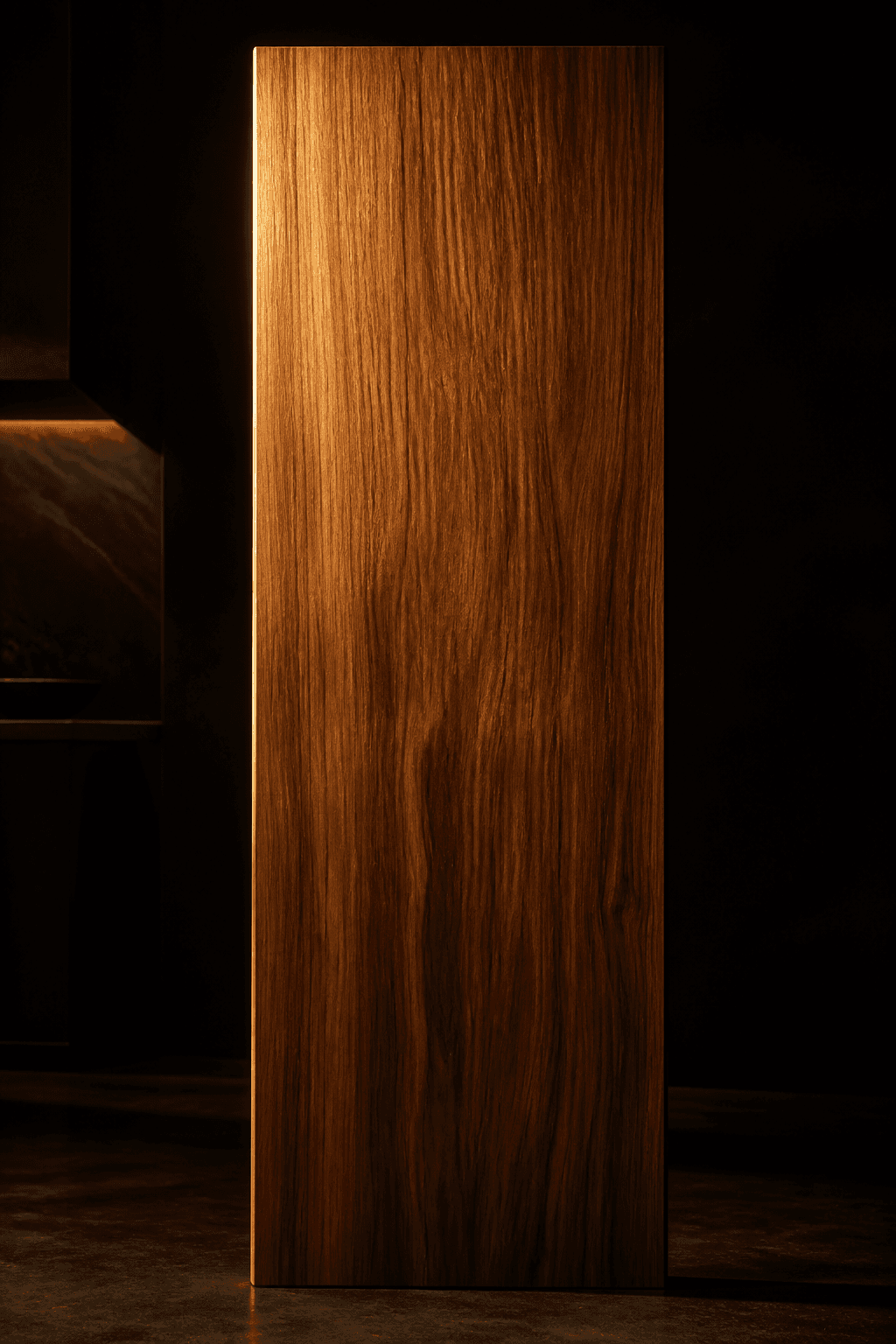
- 01Teak is warm and golden, and tends to deepen with age.
- 02Walnut brings depth and works in both warm and cool schemes.
- 03Oak is lighter and open-grained, suited to calmer, contemporary rooms.
Species is usually the first decision in a veneer project. It sets the base tone and the grain before any finish goes on, and everything else, from the stone on the counter to the metal on the handles, gets chosen around it.
Teak
Golden to mid brown, with a straight to gently wavy grain. Teak reads as classic and unhurried. It tends to mellow over time toward a deeper honey tone, so a room finished in teak keeps changing, slowly, for years.
Walnut
Mid to dark chocolate brown, often with a rich, sometimes figured grain. Walnut brings depth and a quiet sense of luxury. It pairs well with warm brass and with cool grey stone alike, which makes it one of the easiest species to design around.
Oak
Pale straw to warm tan, with a pronounced open grain. Crown-cut oak shows broad arches; quarter-cut oak shows tight lines and, often, a fine fleck. It suits lighter, contemporary schemes and rooms that get a lot of daylight.
Natural variation
Wood is a natural material, so tone and grain vary between logs and even between leaves of the same log. That variation is the point, but it does mean a photograph is never enough to approve a large area.