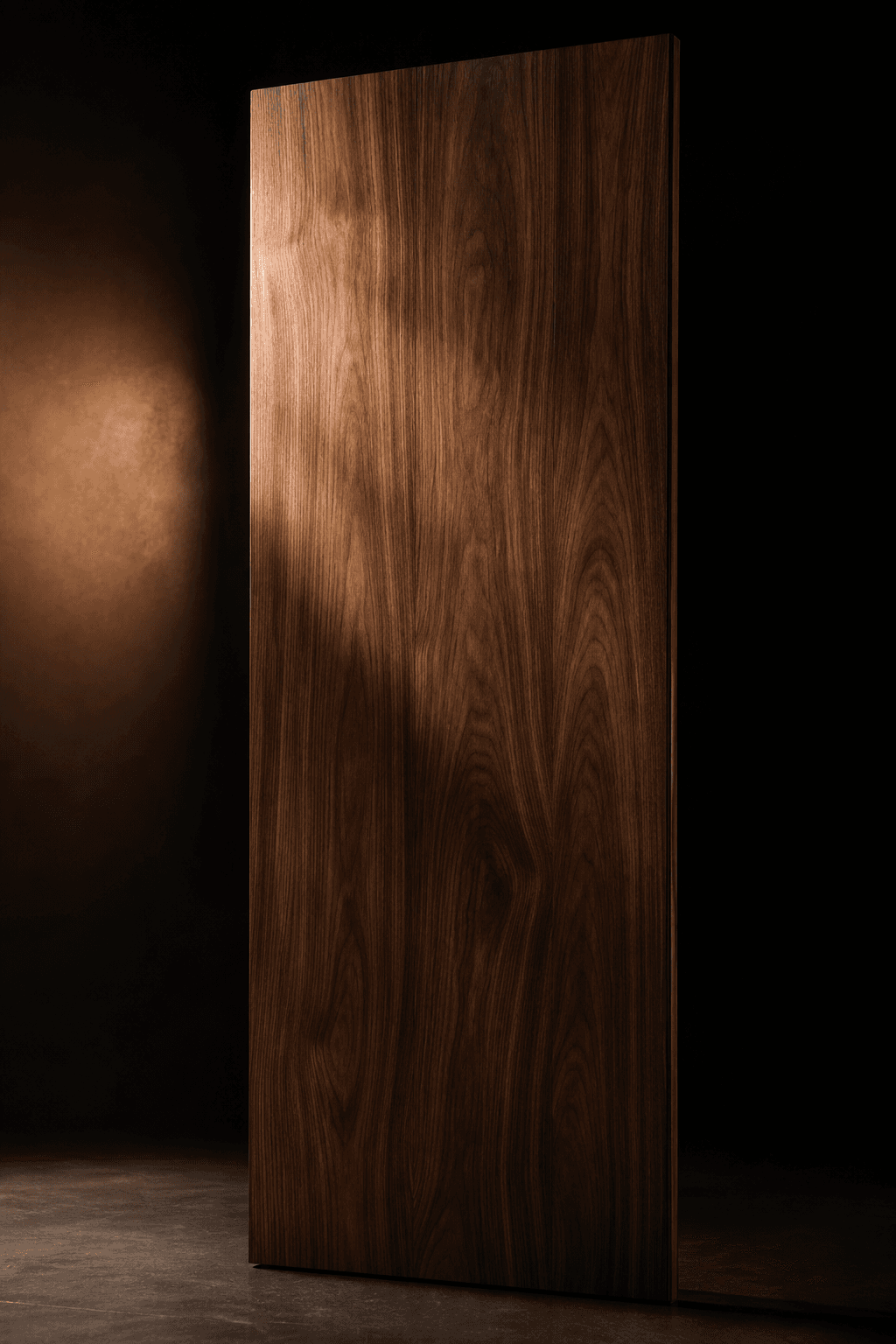
In brief
- 01PU is the toughest clear finish; melamine suits dry rooms.
- 02NC lacquer is easy to repair but softer; oil looks most natural.
- 03Every finish deepens the tone, so approve a polished sample.
For most veneer in Indian homes, PU polish is the hard-wearing choice for surfaces that are touched and wiped, melamine is a sound, economical finish for drier rooms, NC lacquer is quick to apply and touch up but softer, and oil gives the most natural look with the least protection. Whichever you choose, the finish will change the colour you approved, so judge it on a finished sample.
Why veneer needs a finish at all
Veneer is real wood, supplied bare. Until it is sealed it takes up spills, dirt and moisture, and it marks easily. The polish seals the surface, sets the sheen and brings out the grain. Because veneer is polished after the sheets are fixed, the same species can look quite different in two homes, depending on the finish and the hand that applied it.
The four finishes at a glance
| Finish | What it is | Look | Wear | Typical use |
|---|---|---|---|---|
| PU (polyurethane) | A polyurethane coating, usually two-part, that cures into a hard film | Clear and even, from matte to high gloss | Good resistance to water, stains and scratches | Kitchens, dining tables, doors, busy living areas |
| Melamine | A two-part, acid-catalysed clear lacquer | Smooth and clear, matte or gloss | Fair; less tolerant of water and strong sun than PU | Wardrobes, bedrooms, studies and other dry rooms |
| NC lacquer | Nitrocellulose lacquer that dries as its solvent evaporates | Clear, can be rubbed to a high gloss | Softer; more easily marked by heat, water and chemicals | Furniture and low-touch panels |
| Oil | Oil absorbed into the wood rather than a film on top | Low sheen, close to bare wood | Lowest surface protection; needs re-oiling | Feature pieces and low-use surfaces |
PU polish
Polyurethane cures into a tough film that resists water, stains and scuffs better than the other three, which is why it has become the usual choice for kitchens, dining tables and doors. It can be laid matte, satin or high gloss, and a well-applied PU coat gives an even, glass-like surface. It is usually the most involved and costly of the four to apply, and a damaged patch is harder to blend in than lacquer, so it pays to have it done well once.
Melamine polish
Melamine is a two-part, acid-catalysed lacquer that is widely used on furniture in India. It gives a smooth, clear finish at a lower cost than PU and dries quickly. It is less tolerant of water and of long exposure to strong sunlight, so it is better kept to wardrobes, bedrooms, studies and other dry rooms than to kitchen shutters or a table by a sunny window.
NC lacquer
Nitrocellulose lacquer dries very quickly, and each new coat partly melts into the one below, which makes it easy to build up, rub out and touch up. The trade-off is that it is softer and less resistant to heat, moisture and household chemicals than catalysed finishes, and it tends to yellow with age, which shows most on pale species. Opaque duco paint finishes are a different thing altogether: they hide the grain, so they are not a choice for veneer you want to see.
Oil finishes
Oils soak into the wood instead of forming a film on top. The result is the closest to bare timber: low sheen, warm and pleasant to touch. Protection is the lowest of the four, so oiled surfaces mark more easily and need re-oiling from time to time, although refreshing them is simple. Remember that veneer is a thin layer, so any refinishing that involves sanding has to be done lightly, whatever the finish.
Why a finish deepens the tone
Every clear finish darkens wood a little and gives it a wet look that brings the grain forward. Oil-based finishes tend to warm the colour further, and some finishes amber with age. This is why a bare leaf in a showroom usually looks lighter than the polished wall. Ask for a sample finished in the polish you plan to use, or have your polisher do a test patch on an offcut from the actual batch.
Matte or gloss: choosing a sheen
Sheen is how much light the surface reflects, usually described as matte, satin, semi-gloss or gloss. It is a separate choice from the type of polish: PU and melamine can both be laid at different sheens.
- Matte reads soft and natural, and hides fingerprints, dust and fine scratches best.
- Satin has a gentle lustre and is a forgiving middle ground for most furniture.
- Gloss makes grain look deep and colour rich, but shows every smudge, scratch and any unevenness below the surface.
- On a large wall, a lower sheen also reduces glare from windows and lights.
Which finish for which surface?
- Kitchen shutters, dining tables, vanity fronts and doors: PU.
- Wardrobes, bedroom panelling and study furniture in dry rooms: melamine or PU.
- Pieces you want to touch up easily, accepting a softer surface: NC lacquer.
- A natural, close-to-bare look on low-use surfaces: oil.
Common questions
- Which is better for veneer, PU or melamine polish?
- PU is generally better where a surface will be touched, wiped or splashed, because it cures into a harder film with better resistance to water, stains and scratches. Melamine costs less and gives a smooth, clear finish that is perfectly sound on wardrobes, bedroom panelling and other dry, low-wear surfaces. Many homes use both: PU in the kitchen and dining area, melamine elsewhere.
- Does polish change the colour of veneer?
- Yes. Every clear finish darkens wood slightly and gives it a richer, wet look, and some finishes warm or amber further with age. A bare veneer leaf will usually look lighter than the polished result. To avoid surprises, approve a sample finished in the polish and sheen you plan to use, and look at it in your own room.
- Is matte or glossy polish better for veneer?
- Matte or satin is the more forgiving choice for most homes, because it hides fingerprints, dust and fine scratches and reduces glare. Gloss makes grain look deeper and colour richer, but it shows every smudge and any unevenness beneath the finish, so it needs more careful preparation and cleaning. The sheen is chosen separately from the type of polish.
- Can veneer be oiled instead of polished?
- Yes, veneer can be oiled for a natural, low-sheen look that stays close to bare wood. Oil soaks in rather than forming a protective film, so it offers less protection against water, stains and scratches, and it needs re-oiling from time to time. It suits feature pieces and low-use surfaces better than kitchen shutters or tabletops.